This second reflection continues from the sermon “God Knows — Breaking Habitual/Secret Sin” preached by John Bradshaw of It Is Written (https://youtu.be/sw_kc81wO0Q). If Part 1 reminded me that God knows my thoughts and my future, Part 2 confronted me with something far more searching: what happens when what God knows about me is something I am intentionally hiding?
The story of Achan in Joshua 7 is not merely an Old Testament account; it is a solemn warning for every generation of believers. After the miraculous victory at Jericho, Israel stood on the edge of continued triumph. God had given clear instructions. The victory was His. The spoils were not to be taken. Everything devoted to destruction belonged to Him. Yet Achan saw, desired, took, and hid what God had forbidden.
What moves me deeply is that when Israel was defeated at Ai, God did not say, “Achan has sinned.” He said, “Israel has sinned.” One man’s hidden disobedience brought visible consequences to the entire community. Thirty-six lives were lost. Fear spread through the camp. Confidence in God was shaken.
John Bradshaw made a point that struck me deeply: hidden sin is never truly private. It affects more than the one who commits it. That truth forces me to reconsider the idea of “personal compromise.” In a world that emphasizes individual freedom, it is easy to assume that my choices affect only me. But Scripture presents a different picture. God’s people are a body. The spiritual health of one influences the strength of many. Hidden compromise weakens collective power.
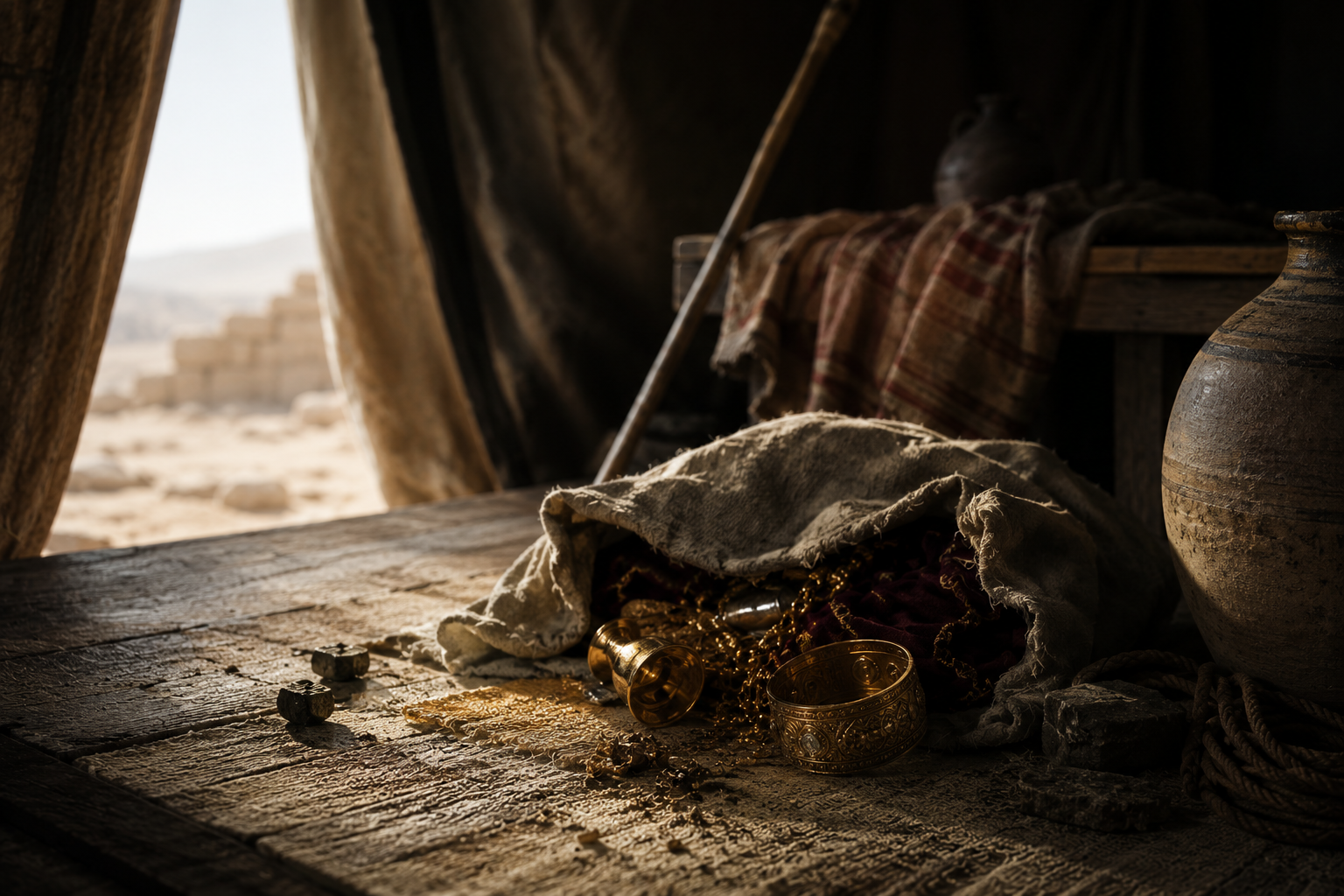
Achan’s sin began with something that seemed small — a garment, silver, gold. It was not open rebellion in the public square. It was concealed beneath a tent. But sin rarely begins dramatically; it begins subtly. It begins with seeing, then wanting, then rationalizing. As was emphasized in the sermon, the progression of sin is often quiet before it becomes destructive.
This is where the quote shared in the sermon becomes piercingly relevant:
“Faith in God is not like a buffet where you choose your favorites and refuse the broccoli, the Brussels sprouts.”
That statement exposes something in all of us. It is easy to embrace the promises of God while quietly resisting the commands that confront us. We gladly accept forgiveness, grace, hope, and comfort — but obedience, surrender, sacrifice, and correction can feel less appealing. Yet true faith does not select only what feels pleasant. It receives the whole counsel of God.
Another statement that resonates here is:
“If God speaks, you own it. If the Bible speaks, you’re up for that.”
This reflects a standard of Christian living that is not negotiable. Obedience is not partial. When Scripture speaks clearly about integrity, purity, reverence, stewardship, honesty, or devotion, it is not a suggestion. It is a call to alignment. Achan knew what God had said. His sin was not ignorance — it was deliberate disregard.
As I reflect personally, I must ask: are there areas where I accept the parts of Scripture that comfort me but resist the parts that correct me? Have I slowly adjusted my standards to fit culture instead of allowing Scripture to shape me? Have I convinced myself that faithfulness in most areas compensates for compromise in one?
The danger of hidden sin is not only that it harms others — it slowly reshapes the heart. It weakens conviction. It diminishes spiritual sensitivity. It makes prayer less confident and worship less vibrant. Even if no one else sees it, the soul feels its weight.
When Israel sought God after the defeat, He did not ignore the issue. He exposed it. Not to destroy them, but to restore them. Once the camp was cleansed, victory returned. That is the grace in this solemn story. God does not expose sin to shame His people; He reveals it to purify them.
Living before an all-knowing God means choosing transparency over concealment. It means allowing Him to search beneath the tent before defeat forces exposure. It means understanding that holiness is not outdated or extreme — it is essential for spiritual power.
And perhaps the most searching question for every believer is this: if God were to gently lift the ground beneath my tent, what would He find?