
This final reflection continues from the sermon “God Knows — Breaking Habitual/Secret Sin” preached by John Bradshaw of It Is Written, which I watched on YouTube (https://youtu.be/sw_kc81wO0Q). As I sat with this message, I realized it was not merely teaching doctrine; it was pressing into my motives, my fears, and my understanding of what it truly means to live before an all-knowing God.
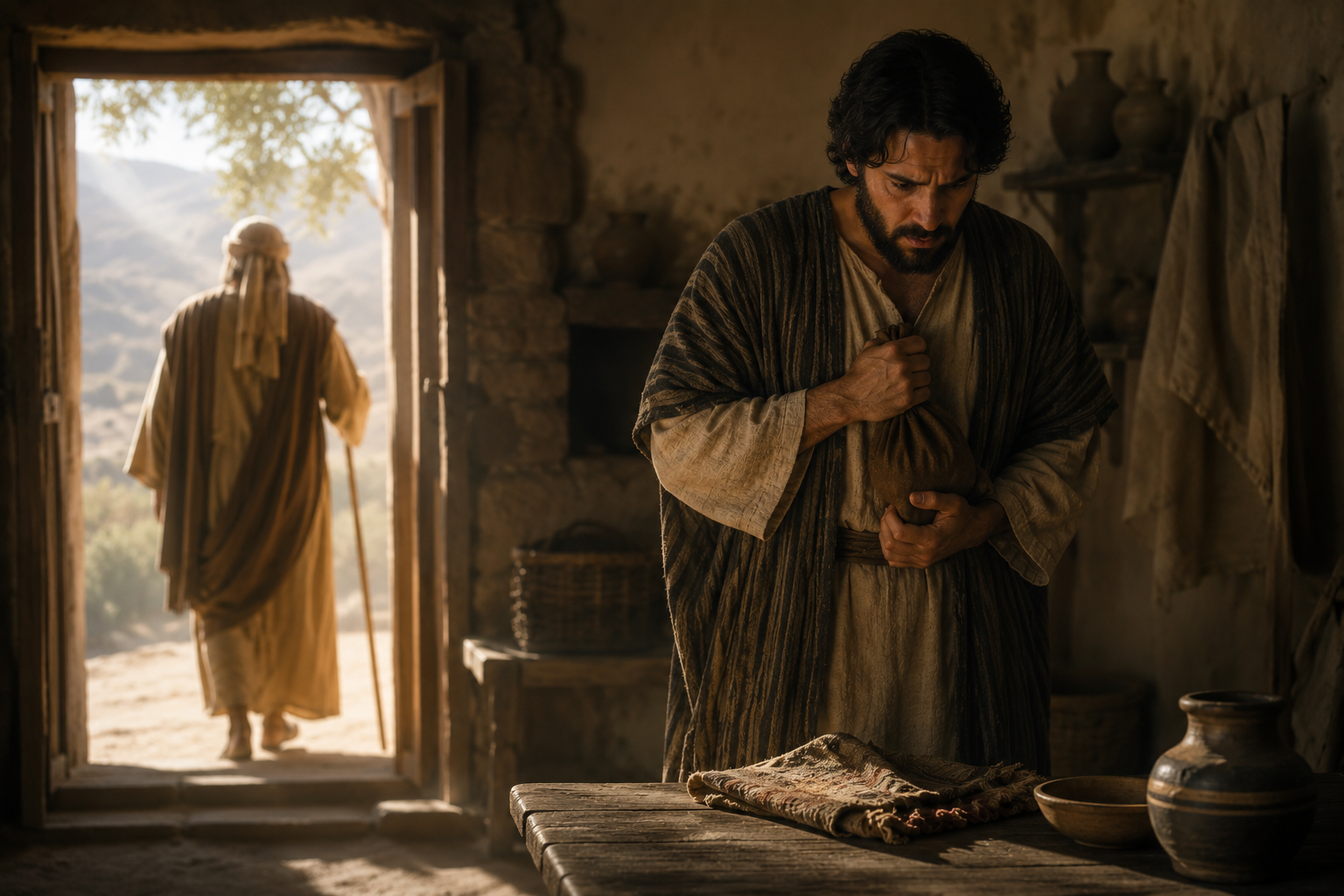
The story of Gehazi has lingered with me more than I expected. Gehazi was not far from God’s work; he was immersed in it. He walked with Elisha. He witnessed miracles. He saw God heal Naaman in an extraordinary way. Yet when an opportunity for personal gain presented itself, something hidden in his heart surfaced. He ran after Naaman. He constructed a story. He accepted gifts in secret. And then he returned as though nothing had happened.
When Elisha confronted him with the words, “Did not my heart go with you?” I cannot help but feel the weight of that question personally. God saw. God knew. Nothing was concealed from Him.
That unsettles me, not because I see myself committing dramatic acts of rebellion, but because I recognize how subtle motives can be. It is possible to serve, to participate in ministry, to appear faithful outwardly, and yet quietly crave recognition, affirmation, or personal significance. It is possible to be involved in God’s work while still protecting parts of the heart from God’s authority. Gehazi was close to holy things, but distance had grown within his heart. That realization forces me to ask: am I serving from surrender, or from self-interest?
There is a phrase many Christians appreciate: “God does not call the qualified; He qualifies the called.” I have appreciated that statement myself. It is comforting to know that God uses imperfect people. But as I reflected on this sermon, I realized how easily that phrase can become a cushion instead of a catalyst. Yes, God calls the unqualified. Yes, He works through weakness. But He does not leave those He calls unchanged. Calling is not a permission slip to remain spiritually immature. It is an invitation into transformation.
When I examine my own life, I must ask whether I am allowing God to refine me or merely relying on the fact that I am involved. Am I mistaking activity for authenticity? Am I confusing participation with purity? Living before an all-knowing God means that I cannot hide behind busyness in church. He sees why I serve. He sees what I desire from it. He sees whether my heart is soft or resistant.
And yet, the story does not end with warning. It also offers deep comfort.
In another moment in 2 Kings 6, when the Syrian army surrounded the city, Elisha’s servant was overwhelmed with fear. I can relate to that reaction. There are moments when life feels encircled by uncertainty, pressure, temptation, or discouragement. The servant’s question, “What shall we do?” feels very human. I have asked similar questions in my own way.
Elisha’s calm response is what strikes me most: “Do not fear, for those who are with us are more than those who are with them.” When God opened the servant’s eyes, he saw what had been there all along — the hills filled with horses and chariots of fire. The protection of heaven had not been absent; it had simply been unseen.
That truth comforts me deeply. The same God who sees my hidden motives also sees the unseen battles around me. The same God who calls me to repentance also surrounds me with protection. When I feel spiritually weak or culturally outnumbered, heaven is not anxious. God is not surprised. He is not scrambling to respond. His resources are already in place.
Living before an all-knowing God means accepting both realities at once. He sees what needs to change in me, and He sees what threatens me from outside. He calls me to sincerity, not performance. He invites me into deeper surrender, not superficial service. And He assures me that I am never alone, even when I cannot see His provision.
As I reflect on this final part of the sermon, I find myself praying more honestly. I ask God to purify my motives before they harden. I ask Him to expose anything in me that resembles Gehazi’s quiet compromise. And I ask Him to open my eyes when fear clouds my vision, so that I might trust the unseen armies of heaven.
To live before an all-knowing God is not to live in fear of exposure, but in freedom of honesty. It is to say, “Lord, You already know me completely. Change me. Guard me. Lead me.”
And perhaps that is the safest place any of us can be — fully known, fully examined, and fully surrendered before Him.